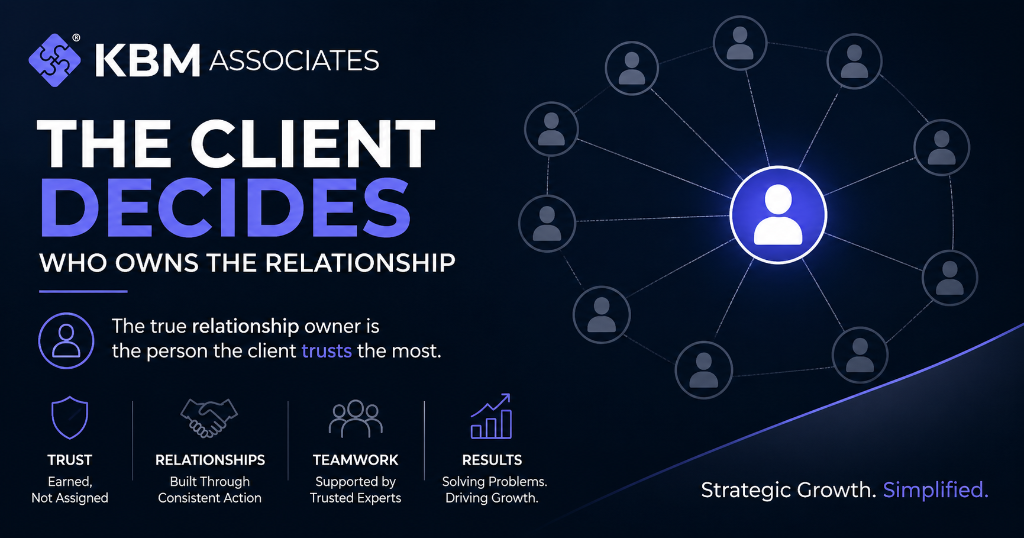
The Client Decides Who Owns the Relationship
Walk into almost any client service firm and ask who owns a client relationship, and you'll likely get one of two answers: the partner who sold the engagement or the manager who was assigned to oversee it.
I believe both answers miss the point.
The true relationship owner isn't determined by an organizational chart or an engagement letter. The relationship owner is the person the client trusts the most.
Trust is earned through consistent action, not job titles. Clients naturally gravitate toward the people who respond quickly, solve problems, communicate clearly, and follow through on their commitments. Over time, those repeated positive experiences establish trust, and trust ultimately determines who owns the relationship.
Consider a common example. A client calls an associate with a tax question. The associate takes ownership of the issue, coordinates with the appropriate team members, keeps the client informed throughout the process, and delivers a timely solution. The next time the client has a question, they don't call the partner listed on the engagement letter—they call the associate who earned their confidence.
I've experienced this firsthand throughout my consulting career. Several clients consistently contacted me first, regardless of the issue they were facing. It wasn't because I held the highest position on the engagement. It was because they trusted that I would take ownership of their problem, involve the right people, and ensure it was resolved effectively.
That distinction matters.
Relationship ownership is not awarded by management—it is earned through trust. Firms can assign account managers, engagement leaders, or client partners, but clients ultimately decide who they trust enough to call first.
This doesn't mean firms should constantly reassign clients based on who receives the most phone calls. Instead, leaders should recognize where trust truly exists and empower those individuals to strengthen it. The strongest client service organizations build teams where trusted individuals are supported by equally trusted teammates, creating a seamless experience regardless of who initially receives the call.
When evaluating who truly owns a client relationship, don't start with the organizational chart. Instead, ask a much simpler question:
When the client has a problem, who do they call first?
The answer to that question reveals who really owns the relationship.
In my next post, I'll discuss why no relationship owner succeeds alone—and how building trust within your own team is just as important as building trust with your clients.